
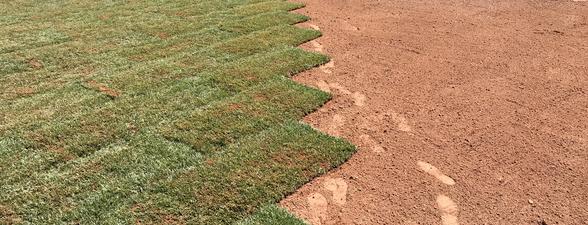
Maximum drought tolerance

Desert Bermuda sod

An advanced hybrid Bermuda selected for Washington County heat, high repairability, and easier containment than common Bermuda.

Desert Bermuda grass from Red Desert Sod

Is it right for your yard?

Fit, tradeoffs, and care.

Composition
Hybrid Bermuda; not common Bermuda
Starting fit
Sunny Washington County lawns, sports fields, and high-wear areas
Water
About 60% less than Kentucky bluegrass in a USU Extension hybrid-Bermuda comparison; results vary
Sun
Full-sun, hot locations
Traffic
High traffic and strong repairability
Growing season
Warm-season grass; strongest growth in summer heat
Winter appearance
Tan during cold dormancy
Color
Bright summer green
Water-use evidence

Utah State University Extension reports that hybrid bermudagrass can reduce lawn water use by more than 60% compared with Kentucky bluegrass. This is a grass-type comparison, not a measured saving for this product or your yard. Read Utah State University Extension grass research. New sod still needs establishment watering; actual use varies by site and irrigation.

Why buyers compare Desert Bermuda

  • The hybrid does not spread by seed like common Bermuda.
  • Its aggressive repairability suits sports and other high-use lawns.
  • Most appropriate where Southern Utah heat and direct sun are the main constraints.
Know before ordering

Warm-season Bermuda can turn tan or dormant in cool weather. Buyers who want winter green should compare cool-season options.

Order and establishment checklist

  1. Measure the installable lawn area in square feet; choose the cutting allowance in the order planner.
  2. Confirm grass choice, current availability, cut date, and pickup or delivery timing.
  3. Finish the soil-preparation and sprinkler checklist before the sod arrives.
  4. Use the DIY installation sequence, or ask if professional installation is offered at the address.
  5. Follow a site-specific new-sod watering plan, then transition to deeper, less frequent watering.
Sod warranty timing

A qualifying sod issue reported within 24 hours after delivery or pickup may be eligible for replacement. After the first 24 hours and through day 14, a qualifying issue may be eligible for an overseed remedy rather than sod replacement. After day 14, there is no standard sod remedy unless Red Desert Sod approves an exception.

Eligibility requires the sod to be installed and watered within six hours and the care and site conditions to be reviewed. The standard sod remedy does not cover sprinkler-system performance or irrigation-related sod damage. Any separate irrigation coverage depends on the written project scope and warranty.

Read all customer policies

Keep the tradeoffs visible

Desert Bermuda beside every Red Desert option.

Product names matter less than the site conditions. Use this compact table before committing to a variety.

Comparison of all Red Desert Sod grass varieties
GrassBest starting fitWater positionSeasonWinter appearanceRisks / tradeoffs
Desert BlendHome lawns that need a balanced, familiar lookModerate; the tall fescue component develops deeper rootsCool-season blend; strongest growth in spring and fallMore cool-season color than BermudaIts fescue-led feel differs from classic soft bluegrass; full-sun heat still calls for irrigation and coverage checks.
Desert BlueComfortable residential lawns and classic bluegrass characterCool-season irrigation; verify coverage and the peak-summer scheduleCool-season grass; strongest growth in spring and fallMore cool-season color than BermudaIts soft bluegrass look takes close summer irrigation; Kentucky bluegrass can develop summer patch, so diagnose brown areas before treating them.
HGT Desert BlueActive lawns where recovery and durability matterBalanced bluegrass care; confirm the seasonal scheduleCool-season grass; strongest growth in spring and fallMore cool-season color than BermudaStill Kentucky bluegrass: its improved heat and traffic traits do not remove summer irrigation or disease-monitoring needs.
RTF Water SaverHomeowners prioritizing lower water use and repairabilityUp to 30% less than comparable cool-season grasses, per BarenbrugCool-season grass; strongest growth in spring and fallMore cool-season color than BermudaThe up-to-30% comparison is for an established lawn, not new sod; confirm that the site's shade and fescue texture suit you.
Desert BermudaCurrent pageSunny Washington County lawns, sports fields, and high-wear areasAbout 60% less than Kentucky bluegrass in a USU Extension hybrid-Bermuda comparison; results varyWarm-season grass; strongest growth in summer heatTan during cold dormancyNeeds full sun, turns tan during winter dormancy, and needs mowing during vigorous summer growth.

Next step

Turn Desert Bermuda into an exact roll and pallet count.

The order planner calculates the rounded quantity first and keeps current pricing and long-distance delivery in the authority-controlled quote.