
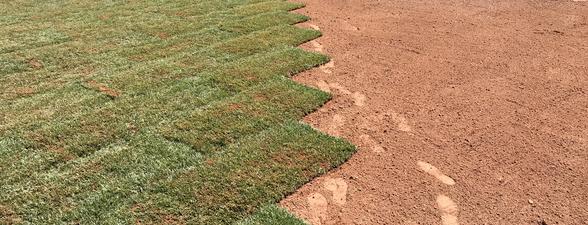
Fresh sod cannot fix a compacted, poorly drained, uneven, or badly irrigated base. Finish the root-zone work before the farm cuts the order.
1. Remove the old surface
- Remove existing grass, weeds, roots, debris, and rocks that interfere with grading.
- Address persistent Bermuda or other spreading plants before new sod is laid.
- Do not bury construction waste or lay sod over the old lawn.
2. Establish drainage and final grade
Set the grade so water moves away from structures and the finished sod meets sidewalks, curbs, and patios at a usable height. Sod adds thickness, so leave room for the finished surface.
- Correct low areas and abrupt humps
- Avoid a grade that sends irrigation toward a foundation
- Keep soil below hardscape by the thickness of the sod
- Compact enough to prevent settling without creating a hard pan
3. Work on the root zone
Southern Utah sites vary from sandy soil to compacted red construction pads and rock. Loosen the root zone and use a soil test or site-specific professional recommendation before adding amendments. Avoid a universal topsoil recipe.
- Loosen compacted soil
- Blend suitable amendment through the root zone rather than creating a thin layer
- Remove large rocks and sharp grade changes
- Use starter fertilizer only as directed for the product and soil
4. Test irrigation before the sod arrives
- Run every zone and repair leaks, broken heads, blocked spray, and obvious dry gaps.
- Adjust head height for the finished grade.
- Make sure the controller is usable and a hose is available during installation.
- Resolve pressure or coverage problems before scheduling the cut.
5. Finish and settle the surface
Rake smooth, lightly settle the soil, correct footprints or low spots, and leave it lightly moist—not muddy—before delivery. Keep pallets and the install path clear.
- Final surface should be smooth and firm enough to walk on
- Do not leave loose clods or deep footprints
- Confirm crew, tools, access, and water
- Install promptly after fulfillment
These guides offer educational context, not a diagnosis or a one-size-fits-all schedule. Confirm the grass, season, soil, irrigation, product label, and local watering requirements for the actual property.
Extension references: USU Extension: Preparing Soil for New Grass in Southern Utah.