
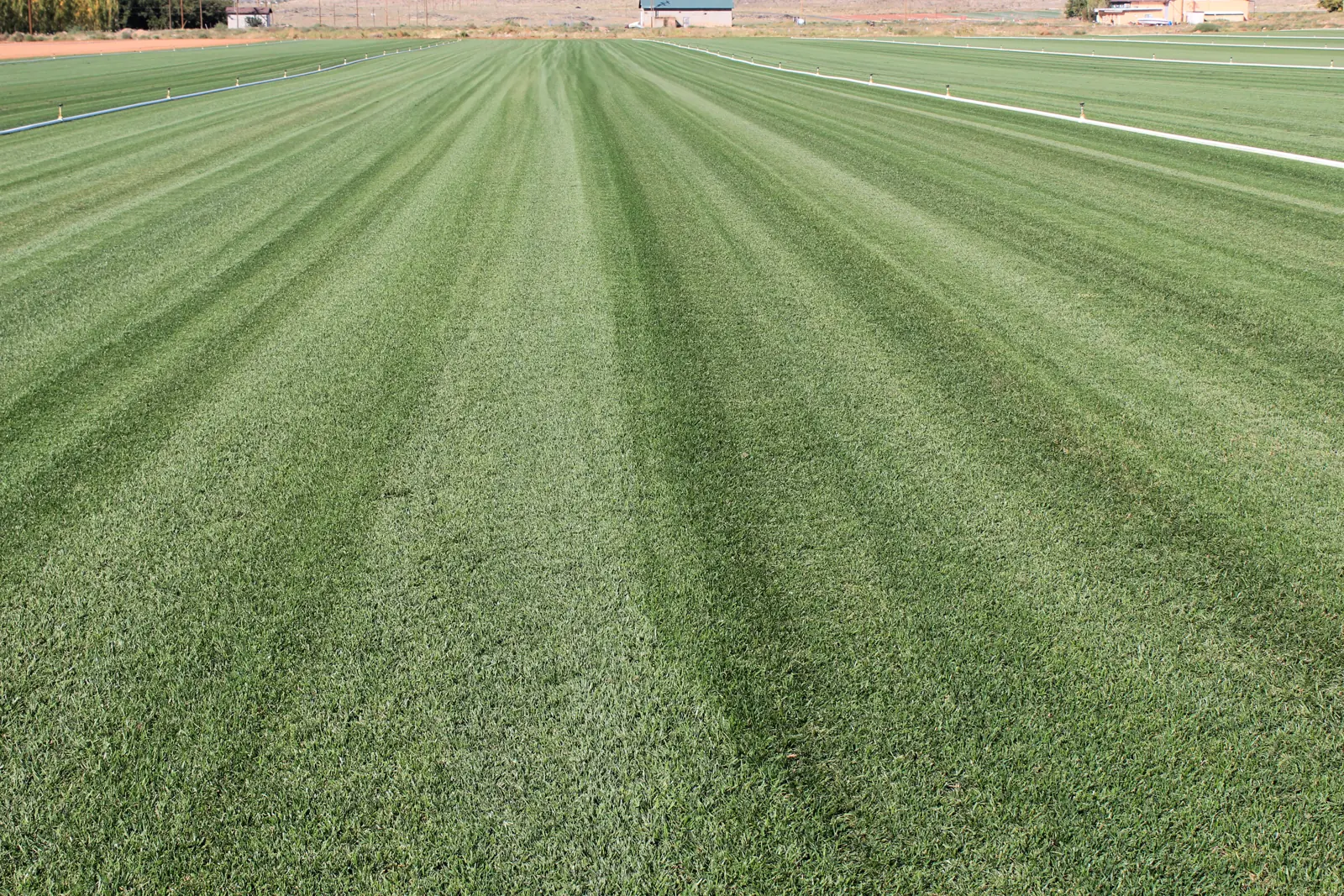
The right fertilizer decision depends on the grass type, whether it is actively growing, the season, the soil and the lawn’s condition. A Bermuda lawn, a cool-season fescue or bluegrass lawn, and sod that was just installed should not all follow the same calendar. In St. George-area heat, first ask what the grass needs—not what the fertilizer bag promises.
1. What do N-P-K numbers mean?
The three numbers on a fertilizer label are percentages by weight of nitrogen (N), phosphate (P₂O₅) and potash (K₂O), in that order. Nitrogen supports green leaf growth, phosphorus supports root development, and potassium helps plants regulate water. More of any one nutrient is not automatically better; a soil test helps show what the soil actually needs. The numbers describe what is in the bag, not how much your lawn should receive.
For an established lawn, the amount to use comes from the grass and soil need, the measured lawn area and the selected product’s label—not the largest N-P-K numbers on the shelf. No single blend or application rate fits every site.
2. Does new sod need fertilizer right away?
Do not put a newly laid lawn on an established-lawn feeding schedule. Its first priorities are good contact with prepared soil and enough moisture beneath the sod for roots to grow. Soil preparation and any pre-plant amendment should be based on the actual site rather than a blanket starter-fertilizer rule.
Utah State University’s Southern Utah establishment guide discusses a first nitrogen feeding about one to two months after sodding. Yellowing earlier deserves a site-specific check once the lawn can tolerate light traffic; it is not proof of a nutrient deficiency. For Bermuda laid near dormancy, active growth matters more than a fixed number of days. Follow any written instructions supplied for the actual project before adding fertilizer.
- First confirm rooting and sprinkler coverage
- Do not treat brown edges or dry seams with fertilizer
- Ask about a soil test or site-specific plan before applying phosphorus or potassium
Check new-sod watering and establishment Review Southern Utah soil preparation
3. Bermuda: feed active growth, not winter color
Desert Bermuda is a warm-season grass. In low-desert guidance, its strongest growth and normal feeding period follow sustained spring green-up into the warm growing season. A glimpse of green on a warm late-winter day is not the same as established active growth. Use the lawn’s actual growth, irrigation capacity and condition to plan any repeat applications.
As Bermuda slows and turns tan with cold-weather dormancy, do not keep feeding it as though it were growing vigorously. If the lawn is winter-overseeded, that temporary cool-season grass is a separate management decision; extra feeding during spring transition can work against Bermuda’s return.
Learn about Desert Bermuda Read the Southern Utah overseeding guide
4. Cool-season lawns: use their growth windows
Desert Blend, Desert Blue, HGT Desert Blue and RTF Water Saver are cool-season options. They grow differently from Bermuda and can be stressed by St. George’s peak heat. Utah State University’s St. George calendar places typical cool-season feeding windows in late winter or early spring and again in fall, while its cool-season guidance ties the number of applications to lawn use, soil test results, clipping return and maintenance goals.
For an established home lawn, think in spaced active-growth applications, not weekly feeding or an automatic bag-every-month routine. The right frequency and amount cannot be inferred from the grass name alone. Avoid pushing a heat-stressed cool-season lawn with nitrogen in midsummer.
5. Should I fertilize during extreme heat?
Not as a reaction to browning, wilting or stalled growth. First check moisture below the grass, sprinkler coverage and the cause of stress. University of Arizona guidance advises against fertilizing cool-season lawns in summer heat. Healthy, actively growing Bermuda has a different warm-season pattern, but a drought-stressed Bermuda lawn still needs the water or site problem addressed before feeding.
A fertilizer application cannot replace water, repair a blocked sprinkler or diagnose insects and disease. If the lawn is changing color unexpectedly, pause the feeding decision until you know why.
6. Water and fertilizer have to work together
Roots need usable moisture to take up nutrients. In Southern Utah, an uneven sprinkler system can create both dry grass that cannot use a feeding and wet areas where material may wash or leach away. Run the zones and correct coverage or runoff before fertilizing. Follow the selected product’s label for application and watering; sprinkler output, soil, slope and season matter more than a universal minute count.
Keep material off sidewalks and driveways, and sweep granules back onto the lawn before irrigation or rain can carry them away. New sod has its own establishment-water needs; those should not be replaced with an established-lawn schedule.
7. Why more fertilizer is not better
Too much fertilizer, a spill or overlapping spreader passes can leave stripes or dead patches rather than a healthier lawn. Excess nitrogen can also drive soft, rapid growth and more mowing while increasing stress and the chance that nutrients leave the lawn through runoff or leaching. Repeatedly feeding a weak lawn without checking water, soil and pests can hide the real problem.
Measure the actual lawn area, calibrate the spreader, follow the product label and clean up spills. Do not double an application because the grass has not turned green quickly.
8. When is a soil test worth it?
Test before preparing a new lawn or when an established lawn repeatedly looks poor despite corrected irrigation and care. It is particularly useful if you are considering phosphorus, potassium or soil amendments, or if Southern Utah soil conditions such as alkalinity, salinity or compaction may be involved. Utah State University recommends periodic soil testing to guide phosphorus and potassium decisions; a routine test does not give a simple, permanent nitrogen number because nitrogen changes in soil.
Bring the result, grass variety and site history to a qualified local adviser. A test can guide a plan, but it does not replace inspection of sprinkler coverage or a patch that may involve pests or disease.
9. Simple St. George seasonal guide
These are decision windows, not dates or a prescribed application schedule. Weather, elevation within the service area, irrigation and the condition of the actual lawn can shift them.
- Late winter to spring: assess cool-season grass as growth resumes; wait for sustained active Bermuda growth before feeding Bermuda.
- Late spring to summer: Bermuda may be in its main growth period if healthy and properly irrigated; avoid pushing heat-stressed cool-season grass.
- Fall: reassess cool-season lawns during renewed growth; taper Bermuda feeding as its growth slows and dormancy approaches.
- Winter: do not feed dormant, non-overseeded Bermuda for green color. Winter-overseeded grass needs a separate care and transition plan.
10. Common fertilizing mistakes
- Feeding dormant Bermuda as though it were actively growing
- Trying to green up drought- or heat-stressed cool-season grass with extra nitrogen
- Applying more than the label or overlapping spreader passes
- Using one schedule for Bermuda, fescue and bluegrass
- Treating a dry sprinkler zone, insect damage or disease as a nutrient deficiency
- Ignoring irrigation runoff or a soil test before adding more phosphorus or potassium
11. When fertilizer is not the answer
Brown patches, thinning or yellowing do not by themselves prove a nutrient shortage. Check irrigation and grass type first. If you see a localized patch, root damage or evidence of insects, use the diagnostic guides before buying a treatment.
Brown patches: fungus, insects, heat or water? Could insects be damaging your lawn?
These guides offer educational context, not a diagnosis or a one-size-fits-all schedule. Confirm the grass, season, soil, irrigation, product label, and local watering requirements for the actual property.
Extension references: USU Extension: St. George Grass-Care Calendar, USU Extension: Preparing Soil for New Grass in Southern Utah, USU Extension: Fertilizing Cool-Season Lawns, USU Extension: Selecting and Using Inorganic Fertilizers, University of Arizona Extension: Low-Desert Lawn Maintenance, University of Arizona Extension: Cool Season Lawns, USU Extension: Grass Pests and Fertilizer Burn.