
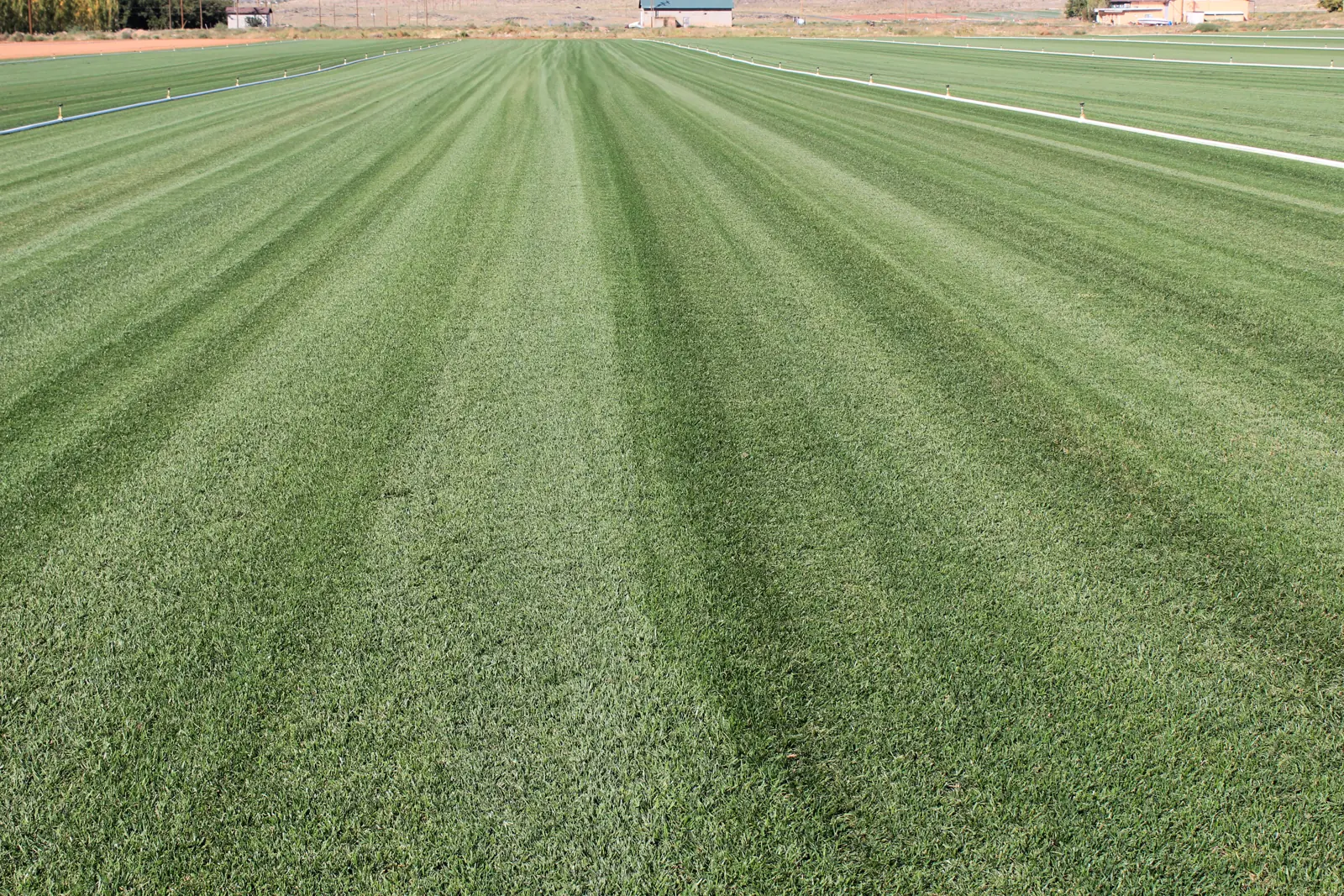
A brown patch is a symptom, not a diagnosis. In Washington County, intense sun and uneven irrigation can resemble insect or disease damage, while Bermuda can change color naturally with the season. Diagnose before you treat: find the grass type, check the site, and watch how the pattern changes before using a fungicide, insecticide or fertilizer.
1. Is the grass actually declining?
Start with the variety and season. Desert Bermuda is a warm-season grass: established, non-overseeded Bermuda commonly turns tan as it enters cold-weather dormancy and greens up again when active growth resumes. That seasonal change is different from one expanding brown spot in an otherwise green summer lawn. Cool-season grasses such as Desert Blend, Desert Blue, HGT Desert Blue and RTF Water Saver have different seasonal behavior and may struggle in peak heat.
- Did the color change follow a cold spell or spring transition across most of the Bermuda lawn?
- Is the patch expanding during the grass’s active growing season?
- Is this newly laid sod or an established lawn? The first checks differ.
Compare Red Desert Sod grass varieties Read about Southern Utah overseeding and Bermuda transition
2. Start with water and sprinkler coverage
Run the affected irrigation zone and watch where water actually lands. A blocked or tilted head, poor overlap, dry strip along pavement, runoff on a slope or compacted soil can leave one part of the lawn thirsty while another stays wet. Compare moisture beneath the brown area with a healthy area after watering; a screwdriver or small soil plug can help reveal a difference. Hard soil can also mean compaction, so do not rely on one test alone.
New sod needs consistent moisture at the sod-to-soil interface during establishment. An established Bermuda lawn and an established cool-season lawn do not share a single watering schedule; sprinkler output, weather, soil and local requirements matter.
- Check edges, reflected-heat spots, slopes and places shaded by fences or equipment
- Look for blocked, broken or misaligned heads and water that runs off before soaking in
- Check both dry and persistently soggy spots rather than simply increasing every zone
3. Look for insect evidence
Heat and dry soil can amplify insect damage, and the color alone cannot identify a pest. Check the edge between healthy and damaged grass. Stems that break at the crown with hollow interiors or sawdust-like material can point toward billbugs; grass that lifts with damaged roots calls for a closer root-and-soil inspection. An insect sighting by itself does not establish that insects caused the patch.
- Photograph the whole pattern, a close-up of stems, and any insects or larvae
- Compare roots and soil at the edge of the patch with a healthy area
- Identify the pest before considering any insecticide
4. Consider disease, but do not assume it
Fungal or other lawn disease is possible when moisture and coverage look adequate yet a patch continues to spread, especially where the grass stays excessively wet or thatch and compaction add stress. Utah State University documents grass diseases in Utah, but a ring or brown area alone does not identify a pathogen. Some Utah cool-season diseases should not be used as a default explanation for Desert Bermuda in St. George.
Record the grass variety, watering pattern, recent weather and how the edge changes. If disease remains plausible, seek identification before using a fungicide; this site does not prescribe a product or rate.
- Look for a recurring or expanding pattern rather than a single color change
- Check whether the soil is saturated, the lawn is heavily thatched or drainage is poor
- Do not treat an unconfirmed patch as ‘summer patch’ simply because it appeared in summer
5. Check heat and everyday site stress
Southern Utah’s full sun, hot pavement and reflected heat can expose weak irrigation coverage quickly. Compaction, traffic, uneven drainage and mowing too short can add stress; so can a sudden change in maintenance. Bermuda tolerates summer heat better than cool-season grasses but still needs suitable water and a sunny site. A shaded Bermuda area may thin for reasons unrelated to fungus.
- Compare the patch with nearby hardscape, shade, foot traffic and construction activity
- Check mowing height and whether the mower scalped a high spot
- Investigate persistent puddling, hard soil or salt-related concerns with a site-specific assessment
6. Rule out localized injury
A small, sharply bounded spot may follow pet urine, a fertilizer or chemical spill, equipment damage, a mower pass or recent construction work. Ask what happened just before the color changed. Those clues are especially useful when neighboring grass remains healthy and the patch does not follow a sprinkler or weather pattern.
- Note recent applications and where material landed
- Look for repeated pet-use or wheel-traffic paths
- Avoid adding more fertilizer or chemicals until the cause is clear
7. New sod needs a different first check
If the area was laid recently, first confirm when it was installed and watered, whether the sod is making contact with prepared soil, and whether both the roll and soil beneath it are moist. Dry seams, curled edges, gaps in sprinkler coverage and runoff may show up quickly in heat. Do not use the appearance of one new roll to diagnose a disease in an established lawn—or the reverse.
For a mature lawn, compare this season’s pattern with prior years, check roots and irrigation, then consider pests or disease if the simpler explanations do not fit.
Review Red Desert Sod’s establishment guidance See soil-preparation checks
8. A simple diagnostic checklist
- Check irrigation coverage and compare moisture below the damaged and healthy grass.
- Look closely at blades, stems, roots and soil at the edge of the patch.
- Identify the grass and ask whether the color change matches Bermuda dormancy or another expected seasonal transition.
- Look for insect evidence; do not infer a pest from brown color alone.
- Consider heat, reflected surfaces, mowing, traffic, drainage and recent applications.
- Photograph the same area over several days and note whether the patch spreads or follows a sprinkler pattern.
- Get help identifying the cause before applying a fungicide, insecticide or fertilizer blindly.
9. When to get help
Ask for a closer diagnosis when a patch spreads despite corrected irrigation, roots detach easily, insects or unusual leaf symptoms are present, or new sod is deteriorating rapidly. Share the grass variety, installation date if recent, irrigation history and clear photos of the whole area and its edge. Utah State University Extension’s Plant Pest Diagnostic Lab explains when a grass sample or photos may help; confirm its current submission instructions before sending anything. Red Desert Sod can discuss the sod and order history, but this guide does not promise a pesticide or fungicide treatment service.
These guides offer educational context, not a diagnosis or a one-size-fits-all schedule. Confirm the grass, season, soil, irrigation, product label, and local watering requirements for the actual property.
Extension references: USU Extension: Why Is My Lawn Turning Brown?, USU Extension: St. George Grass-Care Calendar, University of Arizona Extension: Low-Desert Lawn Maintenance, USU Extension: Billbugs in Lawns, USU Extension: Utah Plant Pest Diagnostic Lab.