
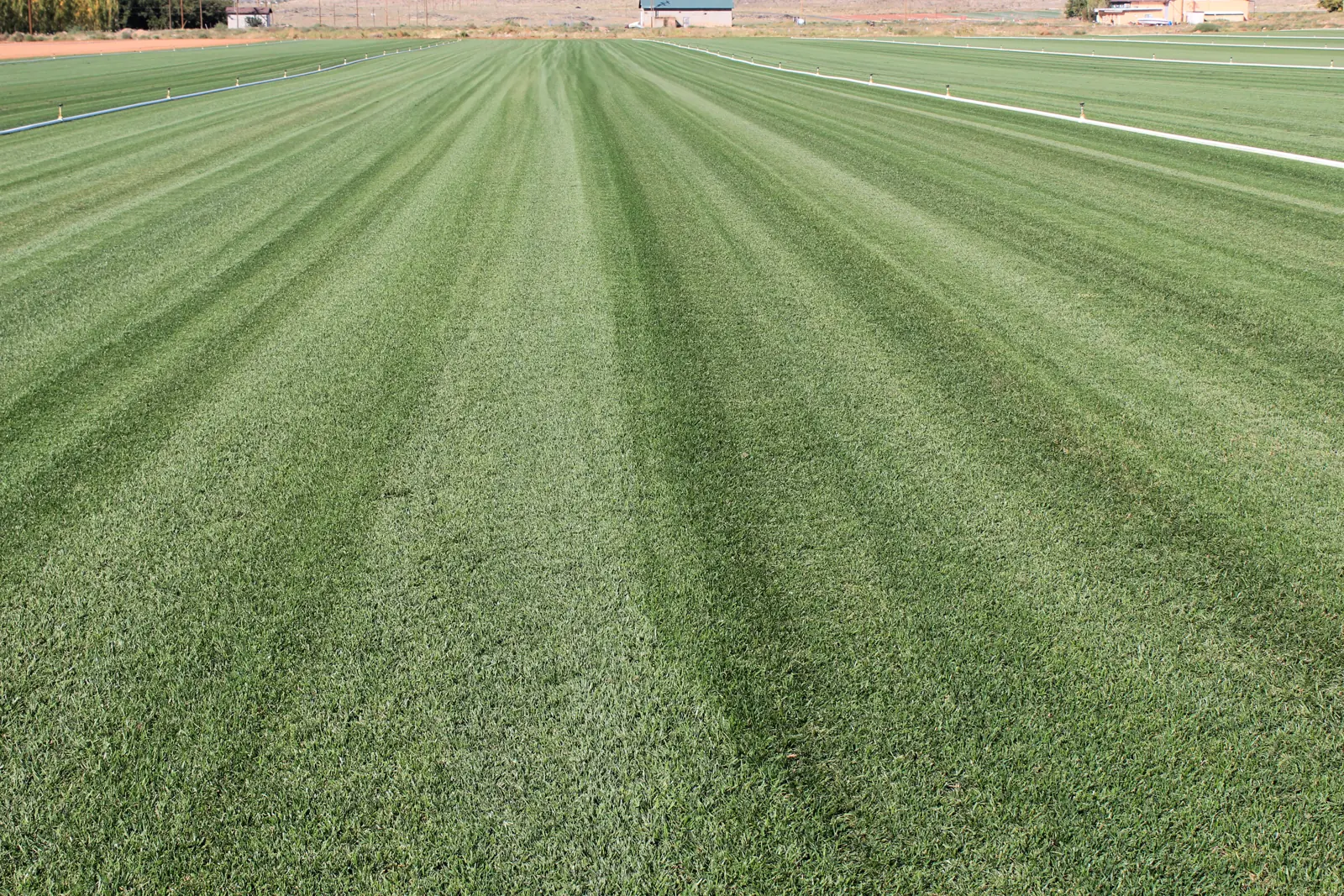
Mow when the sod is anchored into the soil beneath it, the ground can carry a light mower without footprints or ruts, and the grass has grown enough for a light cut. There is no first-mow day that fits every St. George lawn. Check several places before you start; if pieces shift or the soil is soft, wait and reassess.
When is the first mow safe?
Gently test an accessible edge in more than one part of the lawn. A piece that lifts readily or slides under light pressure has not anchored well enough for mower traffic. Do not pull hard enough to tear new roots. The grass should be growing, not merely looking tall because it arrived that way.
Walk a short route on the lawn. If shoes leave deep prints, the surface squishes, or a wheel would leave a rut, postpone mowing even if the blades look long. Southern Utah establishment watering keeps the root zone moist, but the surface must be firm enough for the mower. Do not withhold needed establishment water simply to force a mowing date.
- Sod resists gentle lifting at several edges and does not slide
- Ground supports your steps and a light mower without ruts
- Grass is actively growing and a suitable mowing height is known
- Blade is sharp; mower and tires are clean and correctly set
Before you start the mower
Use a light-weight mower for the early cuts. Check the blade, deck setting and wheel travel before entering the lawn. Avoid low spots, loose seams and saturated patches; wait for those areas to firm up. A sharp blade cuts instead of tearing tender leaves.
- Check the grass variety and select its maintenance height
- Remove debris and flag raised sprinkler heads or uneven sod edges
- Choose a time when the leaves are not dripping and the soil is firm
- Plan broad turns off the new sod when possible; do not pivot a powered wheel on one spot
Mowing height for Red Desert Sod grasses
Use the established-lawn guidance below as a starting point for the mower setting, not as permission to mow unrooted sod. The first cut should be light. If your order includes product-specific written care instructions, use those for the exact grass and mower.
- Desert Blend: its tall-fescue and Kentucky-bluegrass components fit Utah State University’s general cool-season home-lawn range of 2½–4 inches.
- Desert Blue and HGT Desert Blue: Kentucky-bluegrass lawns also fit that general 2½–4-inch cool-season range; avoid dropping to the lowest deck setting for a neater first cut.
- RTF Water Saver: as a tall-fescue lawn, start with the same general 2½–4-inch cool-season range unless its specific care instructions say otherwise.
- Desert Bermuda: this is a hybrid warm-season grass, not bluegrass. University of Arizona’s desert-grass guidance shows different mowing heights for different Bermuda hybrids and maintenance levels. Confirm the exact Desert Bermuda cultivar and suitable mower setting with Red Desert Sod before choosing a numerical height; do not transfer the cool-season range to it.
Compare the five RDS varieties See Desert Bermuda’s fit and care
Make the first cut gentle
Follow the one-third rule: remove no more than about one-third of the leaf height in one pass. If the lawn grew tall while it rooted, raise the deck for a first light cut and lower it gradually over later mowings toward the appropriate height. Do not scalp it to catch up in one pass.
Move steadily, use broad turns and keep heavy wheel traffic off loose edges. Stop if the mower pulls up sod, tears leaves or leaves tracks. Correct the cause and let the affected area settle before trying again.
Heat, watering and a soft surface
Hot sun and reflected heat around St. George can stress newly rooted sod. Cutting too short removes leaf area when the lawn is still establishing; cool-season grasses are especially vulnerable in peak heat. Bermuda grows actively in warm weather, but newly laid Bermuda still needs anchoring and sound moisture management before mower traffic.
Irrigation may leave the sod and soil too wet for wheels even when the grass is tall. Ruts, smeared soil, shifting pieces or deep footprints mean the surface is not ready. Inspect the root zone and sprinkler coverage rather than adopting a universal watering or mowing timetable.
Check the new-sod watering phases Diagnose brown or stressed areas
Bermuda dormancy and seasonal transition
Non-overseeded Desert Bermuda can turn tan and slow or stop growing in cool weather. That seasonal color alone does not mean it needs a mow or treatment. Resume a regular mowing rhythm when active growth returns, using a Bermuda-appropriate height and avoiding scalping the new lawn.
Winter overseeding adds a temporary cool-season grass with its own mowing needs. Do not treat a newly laid Bermuda lawn as an established overseeding project or assume the winter grass’s height is the Bermuda height.
First-mow mistakes to avoid
- Mowing because a fixed number of days passed, without checking whether sod is anchored
- Rolling a heavy mower over saturated soil or loose seams
- Scalping a high spot or removing too much leaf in one cut
- Using a dull blade that tears instead of cuts
- Pivoting sharply on tender sod or repeatedly tracking the same soft path
- Using a bluegrass or fescue height automatically for Desert Bermuda—or the reverse
Quick first-mow checklist
- Walk the lawn and gently check several edges: do pieces stay in place without lifting easily?
- Check the ground underfoot: no deep prints, squishing or wheel-rut risk?
- Identify the grass and set a sharp-bladed, light mower for a suitable height?
- Will this pass remove no more than roughly one-third of the leaf?
- Can you cross the lawn with broad turns, avoiding loose seams and soft spots?
- If any answer is no, wait, correct the problem and check again. If a patch is thinning or brown, diagnose water, heat or insects before assuming mowing is the cause.
Brown patches: fungus, insects, heat or water? Could lawn insects be involved? When should new sod be fertilized?
These guides offer educational context, not a diagnosis or a one-size-fits-all schedule. Confirm the grass, season, soil, irrigation, product label, and local watering requirements for the actual property.
Extension references: USU Extension: Preparing Soil for New Grass in Southern Utah, USU Extension: Weed Control Options for Residential Lawns in Utah (cool-season mowing), University of Arizona Extension: Mowing Desert Lawns, University of Arizona Extension: Low-Desert Lawn Maintenance.